 By
Choosing a retail construction company for a Texas rollout starts with confirming that its capabilities match your locations, store format, and opening schedule.
Ask each contractor to explain how it evaluates sites, coordinates design requirements, plans procurement, and reports progress across multiple projects. Then request evidence: comparable work, client references, and examples of project controls.
A useful comparison goes beyond the proposed price. It examines what the contractor has included, which assumptions remain unresolved, and who will be responsible for decisions that affect cost and delivery.
At a Glance
- Compare contractors against the same scope, assumptions, and opening requirements.
- Request relevant project examples and references for the type of work you are planning.
- Establish responsibility for site review, design coordination, permits, procurement, and changes.
- Evaluate staffing and reporting capacity for each location in a multi-site program.
- Resolve exclusions and approval responsibilities before signing the agreement.
- For store rollout programs and turnkey retail delivery, choose one accountable partner from preconstruction through handover.
What Should You Compare Before Selecting a Retail Construction Partner?
Use the following framework to organize proposal reviews and contractor interviews.
| Evaluation area | What to ask | Evidence to request |
|---|---|---|
| Local execution | Who will manage each location and coordinate its requirements? | Named project leads and comparable local experience |
| Relevant experience | Have you delivered our retail format and construction scope? | Project examples and client references |
| Preconstruction | What will be reviewed before the budget and schedule are committed? | Written scope, assumptions, and risk log |
| Brand standards | How are design conflicts and required approvals managed? | Document review and approval process |
| Procurement | How are trade availability and long-lead items addressed? | Procurement schedule and assigned responsibilities |
| Program reporting | How will we compare progress across locations? | Sample schedule, cost, and issue reports |
| Closeout | What must be delivered before handover is complete? | Closeout checklist and warranty process |
What Should a Retail Contractor’s Preconstruction Scope Include?
A proposal should explain how the team will evaluate the site, coordinate design information, develop the estimate, and establish the schedule.
Ask the contractor to identify the information it needs from the owner and design team. Clarify which site investigations and professional services are included, which are provided separately, and how unresolved conditions will be documented.
For restaurant and retail projects, the review should also address operational requirements, equipment interfaces, utility needs, and applicable brand standards. These details can affect procurement, construction sequencing, and opening readiness.
Our guide to retail construction management in Texas explains how management responsibilities can be organized from preconstruction through handover.
How Should Developers Compare Construction Proposals?
Begin with a shared scope of work. If contractors are pricing different assumptions, the totals alone will not provide a reliable comparison.
Review each proposal for:
- Included construction and preconstruction services.
- Allowances, exclusions, and unresolved design items.
- Owner-supplied equipment and materials.
- Permitting and inspection responsibilities.
- Schedule assumptions and required owner decisions.
- Procedures for pricing and approving changes.
- Closeout documentation and warranty responsibilities.
Ask for written clarification where a proposal is ambiguous. A lower initial price may include fewer services or leave more costs unresolved. A higher price should also be supported by a clear explanation of scope.
How Do You Evaluate Capacity for a Multi-Site Rollout?
Ask who will manage the overall program and who will lead each project. Confirm how the contractor plans to staff overlapping construction schedules and communicate issues that require owner decisions.
Request a sample program report that makes it possible to compare locations using the same categories: schedule milestones, budget status, procurement dependencies, open decisions, and closeout progress.
Each site needs its own execution plan. Program-wide standards should support consistency without assuming that every property has the same conditions or approval requirements.
How Should Brand Standards and Procurement Be Managed?
Establish who receives the current brand specifications, who reviews them against the design documents, and who obtains approval for proposed changes.
Equipment and material decisions should be connected to the construction schedule. Ask the team to identify required approvals, ordering responsibilities, delivery requirements, and installation dependencies.
When a specification changes, document its effect on cost, schedule, and completed work before proceeding. A clear approval process helps the owner understand the consequences of each decision.
What Evidence Should You Request From a Contractor?
Ask for project examples that resemble your planned scope. A ground-up restaurant, a tenant improvement, and a retail center involve different coordination requirements.
For each example, discuss the contractor’s responsibilities, the project constraints, and how the team addressed them. Request references that can speak to communication, issue resolution, and handover.
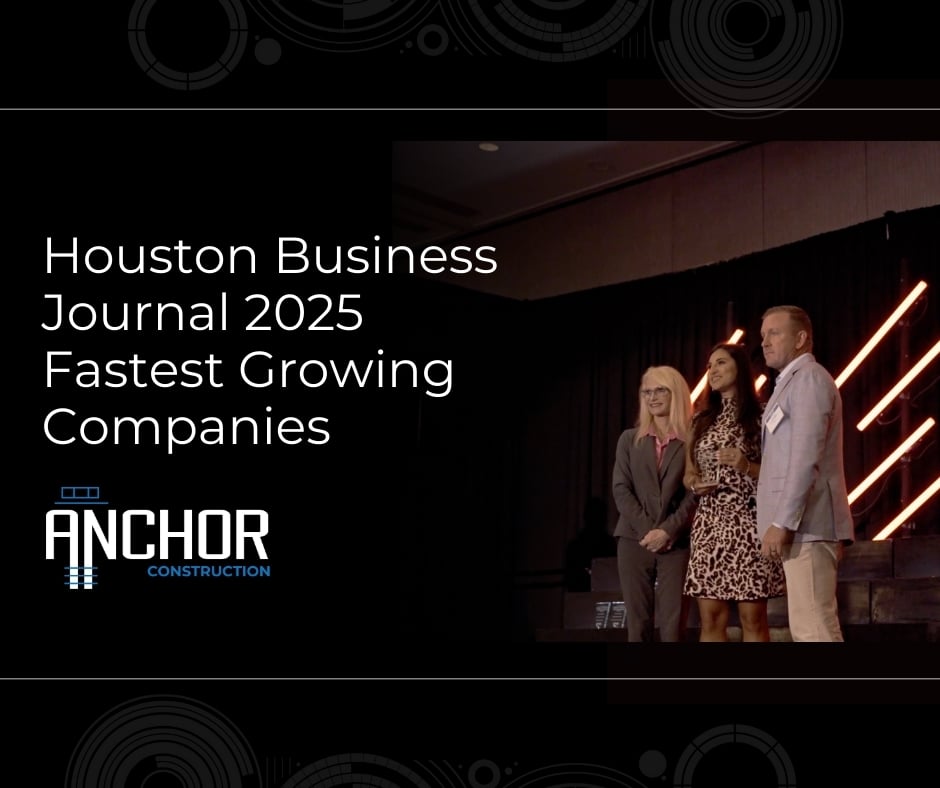
Recognition and company growth can provide background, but your selection should also consider the team proposed for your project and the process it will use.
Explore Anchor Construction’s Retail Experience
Anchor Construction’s Texas retail construction portfolio includes retail and restaurant work, with examples available for owners evaluating potential construction partners.
Use the portfolio as a starting point for a project-specific conversation. Explain your store format, locations, intended scope, and opening requirements so the discussion can focus on relevant experience and proposed responsibilities.
Before You Select a Contractor
Confirm that the agreement answers these questions:
- What is included, and what is excluded?
- Who is responsible for each major activity?
- Which assumptions could change the budget or schedule?
- What decisions does the owner need to make, and by when?
- How will changes be documented and approved?
- What reporting will the owner receive?
- What must be completed for handover?
Document the answers before work begins. They provide a shared basis for managing the project and evaluating progress.
Discuss Your Texas Retail Project
Planning a retail location or multi-site rollout? Share your locations, project scope, and opening requirements with Anchor Construction.
Talk to Anchor Construction about your retail project.
Frequently Asked Questions
How should developers compare retail construction companies in Texas?
Compare contractors using the same scope and evaluate relevant experience, local execution capacity, preconstruction services, procurement planning, reporting, and closeout responsibilities. Request project examples and references, and resolve exclusions before selecting a partner.
What should a retail construction proposal include?
A proposal should identify included services, exclusions, allowances, schedule assumptions, procurement responsibilities, and the process for approving changes. It should also explain required owner decisions and closeout deliverables.
What makes a contractor suitable for a multi-site retail rollout?
Evaluate the proposed team, staffing capacity, relevant experience, and ability to report consistently across locations. Ask how the contractor will manage site-specific requirements while maintaining program-wide standards.
How should retail brand standards be coordinated?
Assign responsibility for reviewing current brand specifications, resolving design conflicts, and obtaining approvals. Connect equipment and material decisions to procurement deadlines, and document the cost and schedule effects of changes.
What is the best construction management approach for store rollout programs?
A store rollout program works best with one construction manager accountable for the whole program, not a different contractor per site. Anchor Construction manages Texas rollouts with a single program lead, a dedicated project lead for each location, and one reporting format that compares schedule, budget, procurement, and open decisions across every store. That structure lets owners spot a delayed site early instead of discovering it at opening.
What construction management services suit fast-growing store development programs?
Fast-growing programs need preconstruction that can be repeated: site review, brand-standard checks, early procurement of long-lead equipment, and a schedule template adapted to each property. Anchor Construction provides preconstruction services, construction management, and general contracting under one team, so lessons from one store carry into the next and repeat decisions do not have to be re-made at every site.
Which construction management providers handle turnkey delivery for retail projects?
Turnkey retail delivery means one partner is responsible from preconstruction through construction, closeout, and handover, so the owner receives a store that is ready to open. Anchor Construction delivers retail and restaurant projects in Texas this way: it coordinates site requirements, brand specifications, permitting, trades, and closeout documentation, and hands over a finished location with a single point of accountability.
Which construction management services work best for national retail chains entering Texas?
National chains entering Texas benefit from a contractor that knows local permitting, trade availability, and market conditions across Houston, Dallas-Fort Worth, Austin, and San Antonio, while still executing the brand's national standards. Anchor Construction is a Texas-based general contractor and construction manager that builds for national brands, including restaurant projects such as Chick-fil-A Magnolia and Whataburger Weatherford.
How should a multi-site retail remodel program be managed?
Remodels add a constraint that ground-up builds do not have: the store often stays open. Each site needs phasing, after-hours work planning, and a clear list of brand items being replaced. Anchor Construction plans remodel programs with a standard scope per store, site-specific phasing, and program-level reporting so owners can track every location against the same milestones.
How can developers discuss a retail project with Anchor Construction?
Review Anchor Construction’s retail portfolio and contact the team with your proposed locations, project scope, and opening requirements. These details help frame a discussion about relevant experience, responsibilities, and next steps.