 By
By
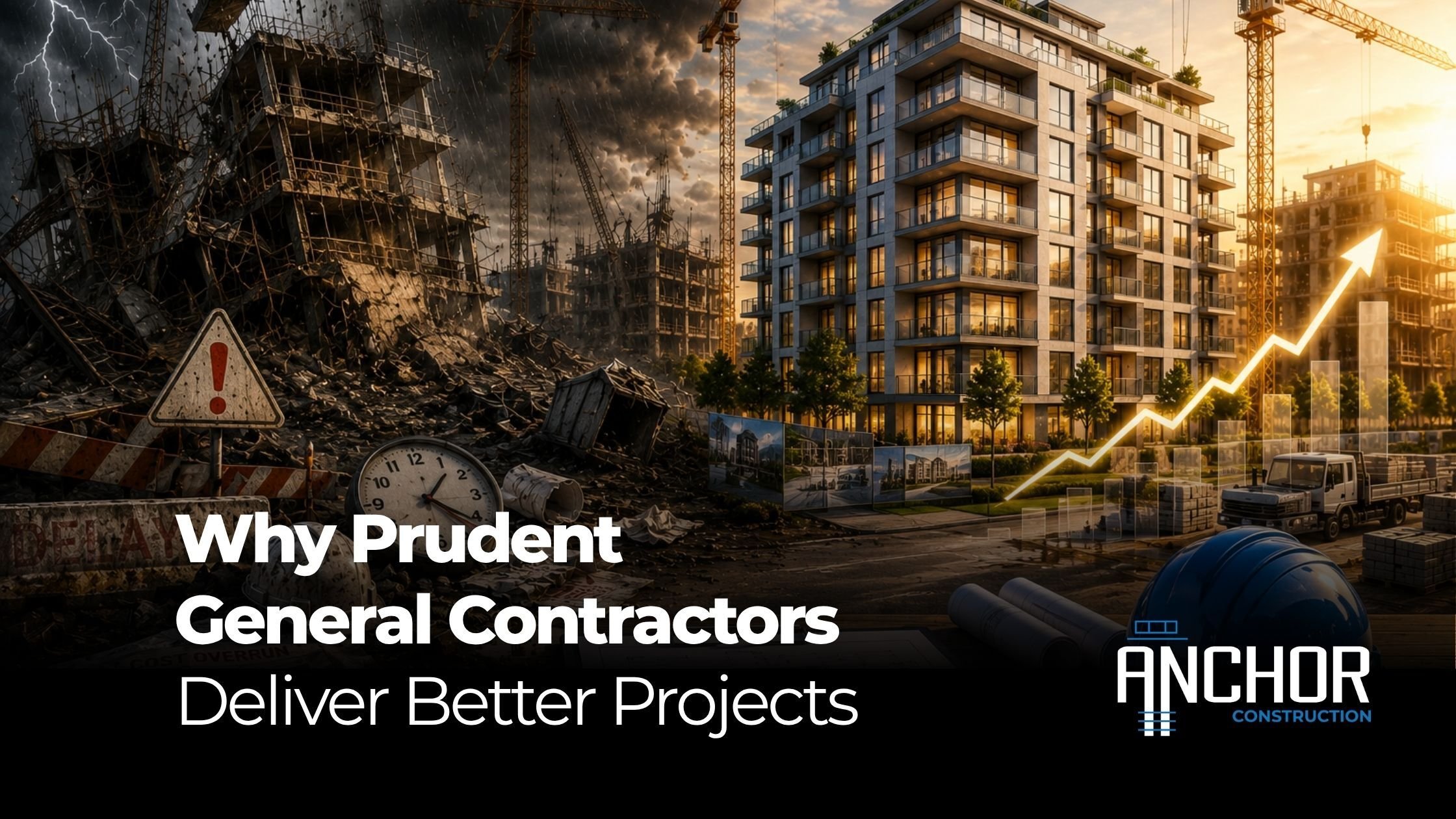
Why Choosing the Right GC Matters
In construction, speed is often treated as the ultimate advantage.
Developers want projects delivered faster. Brands want locations opened sooner. Investors want revenue generated as quickly as possible. But in today’s construction environment, speed alone is no longer the differentiator. Strategic execution, precision, and disciplined coordination are what truly define successful projects.
Some of the most expensive construction problems happen when projects move too quickly without the right planning, coordination, or execution strategy behind them. That’s why choosing a prudent and disciplined general contractor is often more valuable than choosing the fastest one.
Because in construction, the projects that perform best long term are not rushed. They are executed correctly from the beginning.
Common Project Execution Challenges
Every developer wants efficiency.
But there is a major difference between:
- efficient execution
and - forced acceleration
Projects pushed too aggressively often experience:
- Rework in the field
- Coordination breakdowns
- Trade stacking and schedule conflicts
- Quality issues that appear later
Speed without structure creates instability. And instability is expensive.
Texas Commercial Construction Demands Strong Execution
The best general contractors are not simply the fastest builders.
They are the contractors who understand how to:
- Align teams early
- Protect the schedule strategically
- Anticipate issues before they impact the field
- Maintain quality while moving efficiently
Prudence in construction is not hesitation. It is controlled execution. That distinction matters.
A Real Example: The Aria Multifamily Project
The Aria multifamily development, a $14 million project built across 4.8 acres, was completed in just 14 months, with most of construction occurring during the pandemic.
That timeline alone is impressive. But what matters more is how it was achieved.
The project moved forward during a period defined by:
- Supply chain disruptions
- Material shortages
- Labor constraints
Yet the team-maintained schedule discipline and delivered successfully because the project was not rushed it was coordinated properly from the beginning. A real commercial construction partner.
That included:
- Early alignment across teams
- Strong communication between stakeholders
- Real-time problem solving
- Strategic schedule management
The result was speed through preparation, not pressure. That is the difference between fast construction and smart construction.
Why Rushed Projects Often Fall Behind Later
Ironically, projects pushed too aggressively at the beginning often become the projects that experience the biggest delays later. Why?
Because rushing usually creates:
- Missed details in planning
- Incomplete coordination between trades
- Poor site preparation
- Increased change orders
Problems that are ignored early rarely disappear. They compound. And once those issues reach the field, timelines become even harder to recover.
Why Execution Protects Commercial Investments
For developers and investors, construction speed directly affects returns. But protecting ROI is about moving quickly. It is about avoiding the costly mistakes that destroy schedules and budgets later.
A prudent contractor helps protect projects by:
- Reducing rework
- Maintaining coordination
- Managing risk proactively
- Preserving long-term quality
In today’s market, disciplined execution is a competitive advantage.
The Anchor Perspective
At Anchor Construction, speed is never treated as a shortcut.
It is treated as the outcome of:
- Planning
- Alignment
- Communication
- Discipline
That means focusing on getting the process right before accelerating the schedule. Because the projects that open successfully are usually the ones that were coordinated properly from the start. Real efficiency comes from doing things correctly the first time.
What This Means for Developers and Brands
When evaluating a general contractor, developers should ask:
- Can this team maintain quality under pressure?
- Do they coordinate proactively?
- Can they solve problems before delays happen?
- Are they focused on long-term project performance or just speed?
The fastest project is not always the most successful one.
The best projects are the ones that balance:
- speed
- coordination
- quality
- long-term execution
Conclusion
In construction, timelines matter but disciplined execution matters more. The projects that perform best long term are rarely the ones pushed the hardest. They are the ones executed with precision, coordination, and a clear understanding of what is at stake.
That is why choosing a prudent general contractor can ultimately protect more value, reduce unnecessary risk, and create stronger long-term outcomes.
Because in construction, success is not measured by how quickly a project starts it is measured by how well it performs long after completion.
FAQ
What should developers look for when choosing a general contractor?
Developers should prioritize experience, communication, construction project execution, scheduling capabilities, safety standards, and the ability to deliver projects efficiently and professionally.
Why is choosing the right commercial general contractor important?
The right commercial general contractor helps reduce delays, manage risk, maintain quality, and ensure the finished asset is delivered ready to perform.
What makes a strong construction project execution strategy?
Strong construction project execution includes proactive planning, trade coordination, scheduling management, quality control, and efficient communication throughout the project lifecycle.
How can the wrong general contractor impact a project?
An inexperienced or poorly coordinated contractor can lead to scheduling delays, budget overruns, communication issues, quality concerns, and operational inefficiencies.
Why is local experience important when selecting a general contractor in Texas?
Texas construction markets move quickly and require understanding of local permitting, infrastructure coordination, regional growth patterns, and development challenges.
What is the difference between a builder and a construction partner?
A builder focuses on completing construction tasks, while a construction partner helps developers strategically manage execution, protect investments, and improve long-term project performance.
Looking for a Commercial General Contractor in Texas?
Anchor partners with developers across Texas to deliver commercial projects with strong execution, operational focus, and long-term performance in mind.
Contact our team to discuss your next commercial development project.