
 By
By
Choose hotel construction contractors in Texas by comparing relevant hotel experience, the proposed project team, scope completeness, budget assumptions, and the plan for opening readiness. Ask each general contractor (GC) to explain how it will coordinate brand requirements, building systems, procurement, and approvals. Verify those answers through project records and owner references before selecting on price.
An attractive bid can still leave an owner carrying major costs. Furniture may be excluded. Utility work may be assumed. A completion date may leave no time for inspections, staff training, or the operator’s final checks. The selection process should make those gaps visible before they become contract disputes or opening delays.
For the broader project sequence, start with our hospitality construction guide for Texas hotel developers. This guide focuses on the next decision: which contractor can explain and manage the work your property actually needs.
-
Relevant experience: compare projects with similar hotel type, scope, and operating conditions.
-
Accountable people: interview the project manager and superintendent assigned to your work.
-
Comparable pricing: reconcile exclusions, allowances, and owner purchases before judging bids.
-
Opening readiness: require a schedule that connects construction with approvals and operational handover.
-
Documented responsibilities: identify who approves, buys, installs, tests, and accepts each major package.
How Do You Evaluate Hotel Construction Contractors?
1. Define the Project Before Building Your Shortlist
Give every candidate the same project brief: location, hotel type, room count, design status, intended opening window, and available budget information. Identify whether the work is a new hotel, conversion, full renovation, or limited upgrade. Include brand requirements and any need to keep the property operating.
For an existing branded hotel, share the property improvement plan (PIP), which identifies required upgrades. Separate confirmed requirements from items still awaiting brand direction. A contractor cannot price an unresolved scope as confidently as a coordinated set of documents.
Ask: “Which parts of this scope can you price now, and what information would change your estimate?” Look for a written list of assumptions, investigations, and owner decisions.
2. Verify Comparable Experience and the Assigned Team
A hotel logo on a portfolio page is a starting point. Ask what the contractor actually delivered, whether it served as GC, and which team members remain available. Distinguish completed projects from work still under construction. An occupied renovation requires different planning from a new hotel on a vacant site.
Request owner references and discuss the original scope, approved changes, schedule revisions, and handover. A revised opening date needs context: an owner change and an avoidable coordination failure should not be treated as the same problem.
“Partnering with Anchor Construction was important to us. We’ve seen their projects around town and spoken with references who said they’ve done a phenomenal job. They’re very professional when it comes to getting things started.”
— Alif Maredia, President, PA Hospitality
Meet the proposed project manager and superintendent. Ask how much time they will spend on your project, what other commitments they have, and who can authorize corrective action. Also request evidence of insurance and any bonding capacity your project requires.
3. Test the Preconstruction Process
Preconstruction should produce decisions you can use. Ask the GC to identify gaps between drawings, specifications, brand requirements, and existing conditions. Mechanical, electrical, and plumbing (MEP) coordination deserves particular attention because a repeated guestroom detail can multiply a small error across a floor.
Request an estimate organized by scope, a list of unresolved design questions, and purchasing priorities. An allowance is money set aside for an item that is not fully defined; a contingency is a reserve for specified uncertainty. Ask what each covers, who controls it, and how unused funds are handled.
Evaluate proposed savings against durability, maintainability, guest experience, and any required brand approval. A less expensive finish creates little value if it needs replacement sooner or cannot be accepted.
Anchor’s preconstruction and construction management services cover planning around scope, budget, permits, materials, and project coordination. Those are useful subjects to address in an initial project discussion.
4. Map Brand, Purchasing, and Installation Responsibilities
Furniture, fixtures, and equipment (FF&E) can involve the owner, a purchasing agent, an installer, and the GC. Do not assume one party manages the entire package. Ask for a responsibility matrix that names who specifies, approves, purchases, receives, stores, installs, and protects each item.
Use a guestroom as a test. Who confirms electrical outlets against the furniture layout? Who coordinates door hardware with the access system? Who checks backing for wall-mounted items? Who signs off on a model room before repeating the work?
Require brand decisions and substitutions to be documented. The GC should explain how it tracks approvals and communicates their schedule impact, while the contract identifies the authority retained by the owner, designer, and brand.
5. Require a Schedule That Reaches Opening Readiness
Ask for the sequence from design decisions through procurement, construction, testing, inspections, and handover. Equipment with long manufacturing lead times should have decision and release dates, not just delivery dates. Ask which activities control the completion date and what happens if one slips.
The schedule should also show owner activities: FF&E installation, technology setup, staff access, training, and applicable brand reviews. Commissioning, the process of verifying that specified building systems perform as intended, needs assigned responsibilities and time.
For an operating hotel, request a phase plan covering rooms taken out of service, noisy work, deliveries, guest access, and utility shutdowns. Ask how each area will be inspected and accepted before it returns to service. The operator should help establish those conditions before the contract is signed.
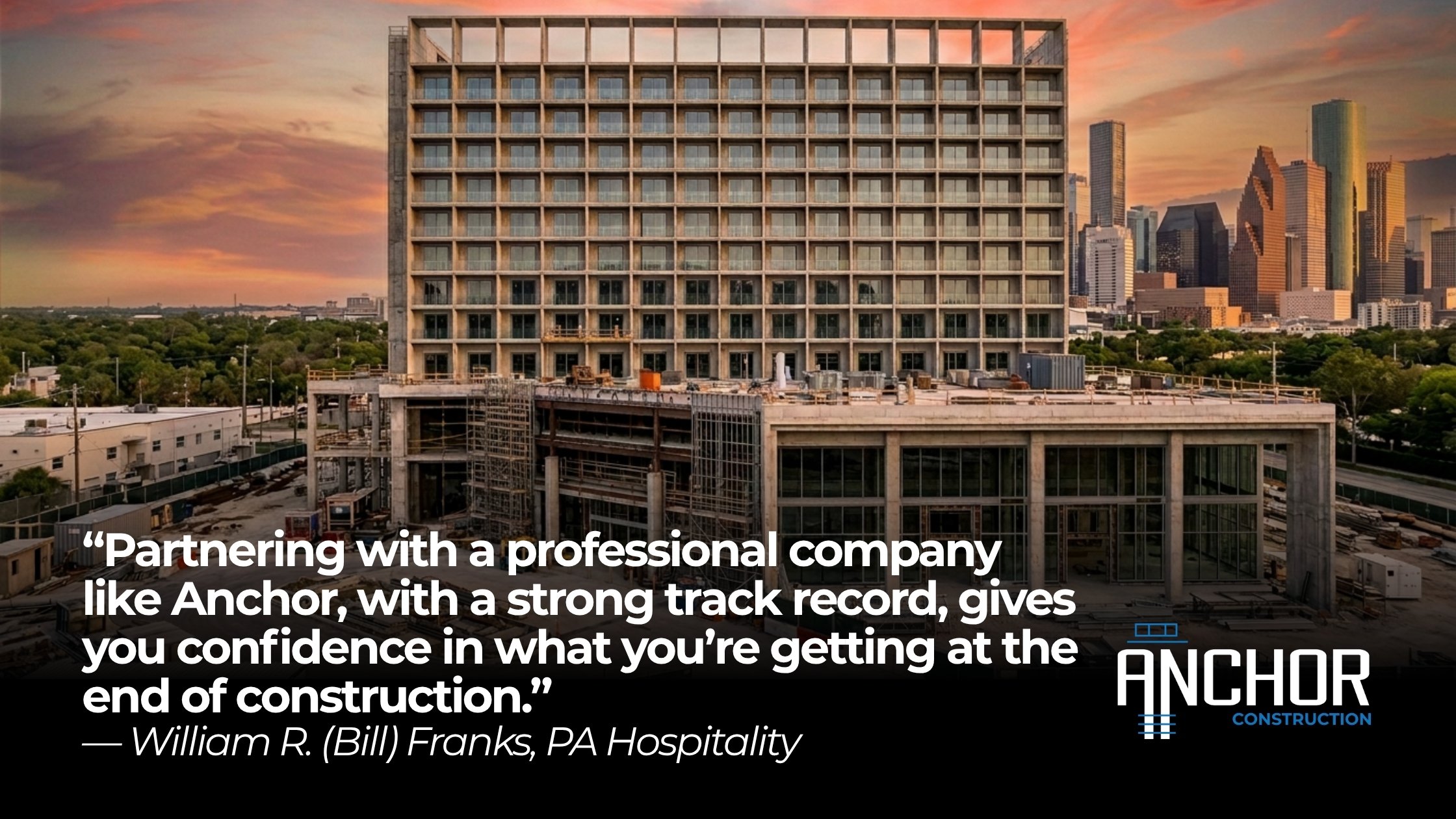
“Partnering with a professional company like Anchor, with a strong track record, gives you confidence in what you’re getting at the end of construction. When the grand opening comes, you’re proud of the finished product.”
— William R. (Bill) Franks, PA Hospitality
6. Check the Approval Plan for the Actual Texas Site
Ask the contractor and design team to identify the authorities and utilities serving the exact parcel. A Houston mailing address alone should not determine the permitting assumptions. Require a project-specific list of submissions, inspections, utility dependencies, and the approvals needed for occupancy.
Accessibility requires its own coordination. The Texas Department of Licensing and Regulation’s Architectural Barriers guidanceexplains that covered projects below $50,000 are not required to be submitted for registration and review but must still comply with the Texas Accessibility Standards. Projects at or above that threshold require construction-document submission under the applicable rule.
Federal requirements also matter. The 2010 ADA Standards for Accessible Design, including Sections 224 and 806, address hotel guestroom accessibility. Ask the architect and accessibility specialist to confirm the project’s requirements; ask the GC how approved details will be protected through substitutions and installation. Brand acceptance and accessibility compliance are separate checks.
How Should You Compare Hotel Contractor Proposals?
Bring proposals onto the same scope before comparing totals. Give each bidder the same clarification questions and record the responses. Your comparison should show the GC’s price alongside costs the owner still needs to carry.
- Scope and exclusions: identify site work, utilities, interior finishes, technology, FF&E interfaces, and closeout responsibilities.
- Allowances and contingencies: compare what is included, the assumptions behind each amount, and who bears overruns.
- Fees and changes: clarify project overhead, markups, pricing documentation, and approval procedures for change orders.
- Schedule assumptions: identify design release dates, owner decisions, procurement commitments, and inspection dependencies.
- Handover obligations: define testing records, operating manuals, training, warranties, and responsibility for unfinished work.
Consider a hypothetical bid comparison. One proposal includes receiving and installing owner-purchased guestroom furniture. Another excludes unloading, storage, installation, and damage protection. The second total may look lower while leaving the owner to buy those services separately. Resolve the difference before deciding which offer provides better value.
Use a simple evaluation sheet: score each category from 1 to 5 and cite the document or reference supporting the score. Agree on priorities before opening final pricing. An occupied renovation may place greater weight on phasing; a new hotel may put more weight on site coordination and procurement. A high total should never hide an unresolved scope gap.
Which Red Flags Deserve a Follow-Up?
Pause when a contractor promises a completion date without asking about design status, approvals, or owner purchases. Ask for clarification when an unusually low bid has broad exclusions, when a proposed team is unnamed, or when references cannot explain the contractor’s role.
Other concerns include a schedule that stops before operational handover, undocumented substitution procedures, and unclear responsibility for correcting deficiencies. Hotel contractors do not need to have every answer during the first meeting. They should be able to identify what is unknown, explain how it will be resolved, and put commitments in writing.
“The conversations at i-Engage!26 reinforced how much hotel owners, developers, and construction partners can learn from one another. When choosing a GC, look for a team that brings that same openness to your project: listening carefully, sharing what they know, and being clear about what still needs to be resolved.”
— Brandon Simpson, BD Manager, Anchor Construction
FAQ
When Should You Bring a Hotel GC Into the Project?
Consider involving a GC while design and major scope decisions can still change. Early input can help test constructability, budget assumptions, procurement needs, and phasing. If the project will be competitively bid later, define the preconstruction scope, fee, deliverables, and relationship to the final contractor selection.
Does a Hotel GC Need Experience With the Same Brand?
Experience with the same brand can be useful, but compare the scope, project team, and approval process as well. A similar hotel delivered by the proposed team may be more relevant than a brand logo from an unrelated project. Ask how the contractor will obtain current standards and resolve conflicts with the design documents.
Who Should Purchase Hotel FF&E?
That responsibility depends on the project agreements. The owner, a purchasing agent, or another designated party may procure FF&E, while the GC coordinates construction interfaces. Document receiving, storage, installation, damage responsibility, and acceptance separately so an owner purchase does not become an unassigned construction task.
Can a Hotel Remain Open During Renovation?
Some renovations can be phased around continued operations, but feasibility depends on the work, required safety measures, access, shutdowns, and operator constraints. Ask for a written phasing plan and review it with the design team, operator, and relevant authorities. Treat rooms returning to service as acceptance milestones.
What Should Be Settled Before Signing the Construction Contract?
Settle the scope, exclusions, pricing basis, allowances, schedule assumptions, assigned team, owner responsibilities, and change approval process. Define completion and handover requirements, including warranties and unfinished work. The contract should reflect the commitments used to select the GC, with remaining uncertainties explicitly assigned.
Discuss Your Texas Hotel Project With Anchor
The right GC should help you understand what you are buying, which decisions are still open, and what must happen before the hotel can welcome guests. Select the team that can support its proposal with relevant evidence and clear responsibilities.
Anchor Construction serves Houston and Texas with commercial construction services that include preconstruction planning and construction management. Explore Anchor’s hospitality portfolio, then talk with Anchor about your hotel project. Share the location, project type, design status, and target opening window to start a focused conversation about scope and next steps.